





Frozen Shoulder: Symptoms, Causes, Stages and Treatment Options
Difficulty reaching overhead, fastening clothing, combing your hair or sleeping on one side can be frustrating. When shoulder pain is accompanied by steadily increasing stiffness, one possible cause is frozen shoulder, also known as adhesive capsulitis. It develops when the connective tissue surrounding the shoulder joint becomes inflamed and tight, restricting movement. Similar symptoms can arise from other shoulder conditions, so an examination is important before assuming the cause.
What is frozen shoulder?
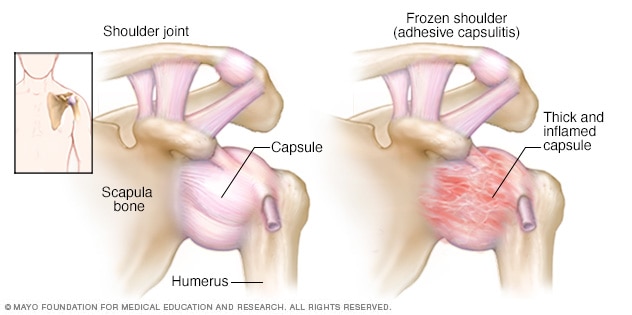
The shoulder is a ball-and-socket joint surrounded by a flexible capsule. In frozen shoulder, this capsule becomes thickened and contracted. The joint then becomes painful and difficult to move. Both active movement (when you move your arm yourself) and passive movement (when someone else moves it) may be restricted.
Common symptoms
- A dull or aching pain around the outer shoulder or upper arm.
- Pain that may become worse at night or when lying on the affected side.
- Increasing difficulty lifting the arm, reaching behind the back or rotating the shoulder.
- Stiffness that affects dressing, bathing, reaching shelves or everyday tasks.
Symptoms often develop gradually. The degree of pain and stiffness varies, and not every painful or stiff shoulder is frozen shoulder.
Who may be at higher risk?
Frozen shoulder is more common in middle age. It may occur after an injury, surgery or another period when the shoulder has not been moved normally. It is also associated with diabetes and certain thyroid conditions. In many people, however, there is no clear single cause. Having a risk factor does not mean that frozen shoulder is inevitable.
The three commonly described stages
- Freezing stage: Pain gradually increases and shoulder movement becomes more limited.
- Frozen stage: Pain may settle somewhat, but stiffness can remain and everyday movements may be difficult.
- Thawing stage: Movement gradually improves. Recovery can take months and sometimes longer.
These stages are a general description, not a precise timetable for every patient. Some people improve sooner, while others have persistent symptoms.
How is frozen shoulder diagnosed?
Diagnosis usually begins with a discussion of symptom onset, previous injury, medical conditions and daily limitations. The clinician assesses shoulder movement, strength and tenderness, comparing both shoulders. X-rays may be used to look for arthritis or other bony causes. Ultrasound or MRI may be considered when the examination suggests another problem, such as a rotator cuff tear. Imaging alone does not establish every diagnosis.
Treatment: does frozen shoulder always need surgery?
No. Many people are treated without surgery. A plan is selected according to the stage, severity of pain, movement restriction, general health and response to earlier care.

1. Activity modification and pain management
Temporarily avoiding movements that sharply aggravate pain can help. Complete immobilisation is generally unhelpful because prolonged lack of movement can worsen stiffness. A clinician can advise on suitable pain-relief options after considering other medical conditions and medicines.
2. Physiotherapy and gentle exercises
Guided mobility exercises and stretching can help maintain or gradually improve movement. The intensity should match the irritability of the shoulder. Forcing a painful shoulder through aggressive stretches or heavy gym exercises may make symptoms worse. A physiotherapist can adjust the programme as pain and movement change.
3. Injections or other procedures
In selected cases, a clinician may discuss a corticosteroid injection to help manage pain, particularly when pain is limiting rehabilitation. Other procedures may be considered when stiffness remains substantial despite an appropriate non-operative programme. The likely benefits, limitations and risks should be discussed before proceeding.
4. Surgery in selected cases
Surgery is not the usual first step. If symptoms remain disabling despite appropriate treatment, a specialist may discuss procedures such as manipulation under anaesthesia or arthroscopic capsular release. These have specific risks and require a planned rehabilitation programme. Suitability is individual.
What can you do at home?
- Continue gentle, comfortable shoulder movement rather than keeping the arm completely still.
- Follow exercises prescribed for your condition; do not copy forceful routines from online videos.
- Use a wrapped warm pack for short periods if it provides comfort, taking care to protect the skin.
- Adjust sleeping position with pillows if lying on the affected side is painful.
- Seek medical advice if symptoms are worsening or daily function is significantly affected.
Frozen shoulder or another shoulder problem?
Rotator cuff disorders, shoulder arthritis, bursitis and neck-related nerve problems can also cause pain or restricted movement. The distinction matters because treatment differs. Dr. Gautam Gupta’s website provides information about shoulder pain evaluation and the wider orthopaedic treatment services.
Frequently asked questions
How long does frozen shoulder last?
It can last many months and sometimes more than a year. The course varies, and some people have residual stiffness even after pain improves.
Can frozen shoulder get better without surgery?
Yes. Many cases are managed with activity adjustment, pain management and guided exercises. Surgery is considered only in selected persistent cases.
Should I exercise if my shoulder hurts?
Gentle, prescribed movement is often useful, but exercises should not be forced through severe pain. Ask a clinician or physiotherapist to tailor the programme.
Is frozen shoulder linked to diabetes?
Yes, frozen shoulder is more common in people with diabetes. Good overall diabetes care is important, but it does not guarantee prevention.
Do I need an MRI?
Not everyone does. The need for imaging depends on the examination and whether another shoulder condition is suspected.
When to seek medical advice
Arrange an orthopaedic assessment if pain, stiffness, swelling, weakness or restricted movement persists, returns repeatedly, or interferes with sleep, work, walking or daily activities. Seek urgent medical care after a significant injury if you cannot use the affected limb, have severe or rapidly increasing pain, visible deformity, loss of sensation, or a hot swollen joint with fever.
Consultation in Kolkata
For an individual assessment and guidance on appropriate next steps, you may contact Dr. Gautam Gupta, Orthopaedic Surgeon, Kolkata. The appropriate treatment depends on the clinical examination, medical history and relevant investigations. Please confirm the current consultation venue and appointment schedule before visiting.
Appointment: +91 62917 71106
Website: Contact Dr. Gautam Gupta
Trusted medical references
This article is intended for general educational purposes only and should not replace professional medical consultation, diagnosis or treatment. Individual treatment decisions should be made after evaluation by a qualified healthcare professional.